Last Updated on June 13, 2026 by David
What Contributed to the Patchy Look of the Indian Slate in Barnes After an Ineffective Sealing Attempt?
Evaluating the Slate’s Initial Condition
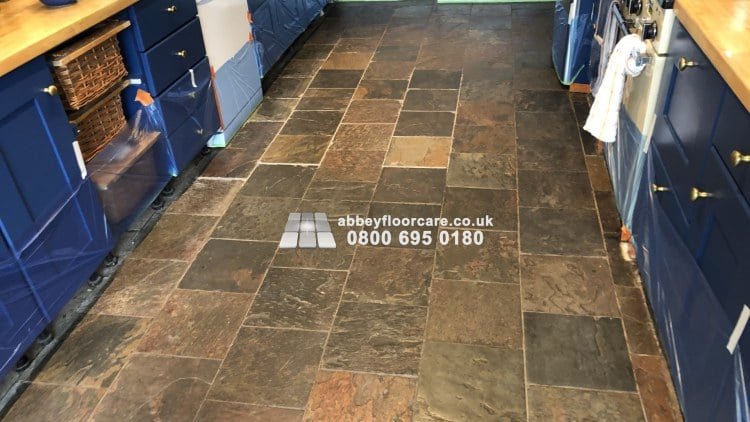
If your Indian slate floor presents a patchy appearance after sealing, it is essential to investigate beyond just surface grime. The primary question is what causes the floor to look uneven under standard lighting. In Barnes, the slate showed a fatigued, blotchy appearance throughout the hallway, kitchen, and rear extension. The dull patches contrasted sharply with darker areas where remnants of previous coatings still caught the light.
While the slate surface remained fundamentally sound, the flawed finish created an impression of neglect. The homeowner dealt with a porous domestic stone that displayed softer characteristics, increasing its susceptibility to absorption, which was worsened by the prior uneven sealing attempt.
The textured finish complicated the assessment of the floor’s condition from a distance. A mechanically altered surface does not reflect light consistently, leading to varied visual appearances. Some sections appeared darker due to ridges and troughs, while recessed areas retained dull residue. This surface texture added to the floor’s character and should not be flattened.
Understanding the Barnes Restoration Project
The Barnes project involved a substantial slate floor that linked various living spaces, including the hallway, kitchen, and a spacious rear extension. This pronounced patchiness detracted from the overall atmosphere of the home’s primary traffic areas.
In the Barnes SW13 region, the local residential architecture features a blend of Victorian and Edwardian styles, often complemented by modern rear extensions. Slate floors are particularly favoured in hallways, kitchens, and open-plan living areas due to their durability. Given that these homes typically combine period features with contemporary enhancements, slate flooring must resist heavy foot traffic as families navigate between indoor and outdoor environments, necessitating proper sealing and maintenance to safeguard the stone.
The context of the property was crucial, as the floor needed to function effectively rather than merely serve as a decorative feature. Hallways and kitchens accumulate loose grit, residues from mopping, food debris, and grease, as well as dry soil from outdoor activities. A genuinely low-maintenance floor remains so only when surface contaminants are thoroughly removed before renewing protective measures.
Key Concerns of the Homeowner
If your floor continues to appear dull despite machine cleaning, the visible problems can be particularly frustrating, especially when the cleaning equipment seems effective. In this instance, the homeowner discovered that standard cleaning methods and mechanical equipment could not revive the vibrant, natural hues expected from the slate.
The edges of the floor clearly showed signs of more than just dirt. Residual coatings accumulated thicker near the borders and recessed areas, resulting in uneven finishes that made the room’s perimeters appear darker and more congested in comparison to the central walking paths.
High-traffic zones displayed a related issue. Light pathways exhibited dullness and colour fading in heavily used areas where grit and foot traffic had worn down the finish. This colour loss signified a reduction in pigment due to wear, rather than mere dirt that could be eliminated with stronger cleaning solutions.
The riven texture of the slate hindered a flat pad from maintaining consistent contact with every section of the stone. This uneven surface texture created significant cleaning challenges; varying contact pressure on high and low points resulted in a mottled appearance even after mechanical cleaning.
Previous discussions focused on equipment and methods, so this revised case study emphasises the specific issues encountered with the Barnes floor. While the cleaning machine proved beneficial, a comprehensive assessment of the floor’s condition—including old coatings, natural texture, and areas of uneven protection—was vital. The machine was part of the solution, but it was not the sole answer.
The initial evaluation identified three distinct problems: patchy colour, dull traffic zones, and thicker residue around the edges. Similar dullness issues are addressed in why slate floors can appear dull after cleaning, yet the Barnes project demonstrated how these symptoms manifested within a single floor. The key takeaway for the homeowner was evident: the floor could be salvaged, but a genuine assessment of the surface could only take place once the old coating was removed.
What Causes a Slate Floor to Appear Intact Yet Remain Dull and Hard to Clean?
A slate floor may look structurally sound while still displaying dullness and becoming increasingly difficult to clean, especially when old coating residues and ingrained grime accumulate. The Barnes floor showcased a build-up of coatings along the edges, with recessed areas containing remnants of application residues, and a textured surface that trapped contaminants after each wash.
A slate floor can seem compromised when old coatings trap dirt instead of safeguarding the stone.
The Indian slate itself had not deteriorated; however, its higher porosity and softer material characteristics meant that worn areas absorbed contaminants more readily once the protective layer had diminished. Old mopping water introduced dirt into grout lines and low points, resulting in dullness and residue accumulation rather than a clean surface.
Repeated washing left the floor looking tired once more, as cleaning water could not eliminate what had become entrenched in the coating and texture. The broader maintenance challenge is explored in how slate floors can appear dull after cleaning, with the Barnes floor clearly exemplifying this issue. Effective ongoing maintenance requires removing grit before wet mopping, using a pH-neutral stone cleaner, and avoiding steam cleaning, as heat can soften coatings and push moisture into the riven surface.
Why Is It Essential to Remove Old Coatings for an Accurate Assessment of the Slate’s Condition?
Inadequately stripping a coated slate floor obscures the true condition of the stone and undermines the reliability of subsequent cleaning efforts. The Barnes floor initially required solvent application to soften old coatings, wax removal to eliminate the heavy film, and careful stripping of residues before informed sealing decisions could be made.
The cleaning machine used a controlled alkaline pH, surfactants, and degreasing action to emulsify organic soil and grease residues. Slate is a fine-grained metamorphic rock that cleaves along its natural planes, limiting mechanical polishing and confining restoration efforts to cleaning and sealing, while also making it sensitive to harsh cleaning agents.
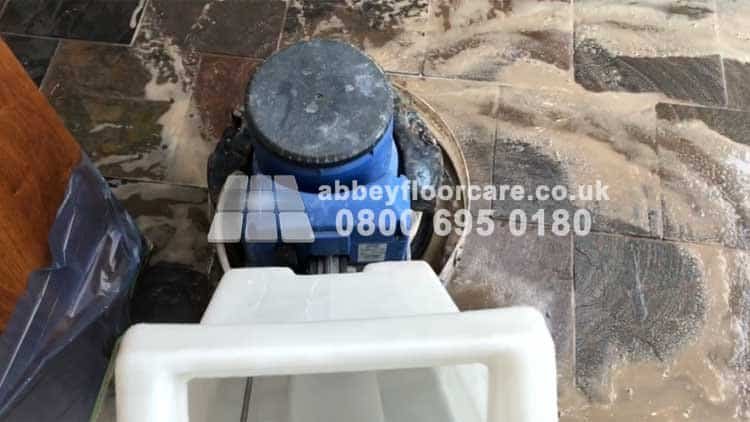
The rotary cleaning process utilised a slow-speed buffing machine with a diluted solution, followed by the removal of the dirty solution before it could dry on the floor. A polypropylene brush scrubbed the slate floor, accommodating the uneven surface while ensuring contact with both high and low points. This meticulous attention to detail is essential on a riven surface.
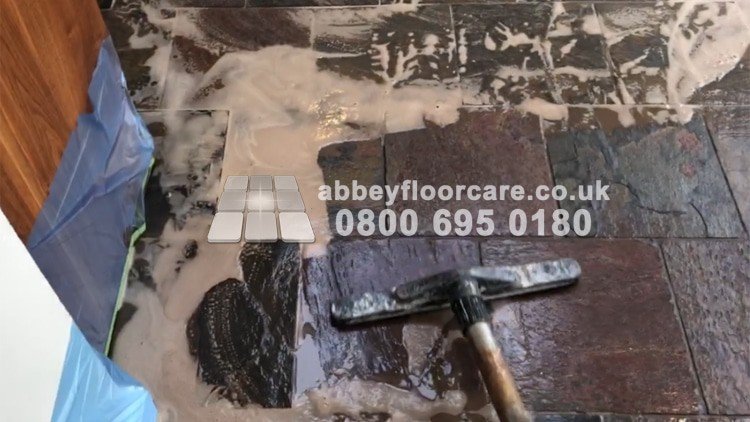
Slurry extraction was crucial, as the riven texture could otherwise trap softened residue. The wet vacuum facilitated the removal of residue, preventing redeposition and controlling contamination, while pressurised rinsing and extraction helped eliminate leftover cleaner and old coating from grout lines and low points.
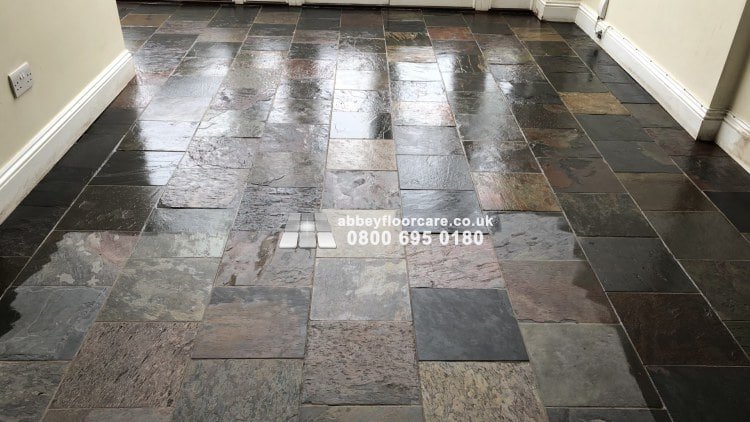
After cleaning, the floor was left to dry before assessing its remaining condition. This pause was critical, as sealing too soon risks trapping moisture, chalky residues, and substrate moisture, potentially compromising sealant integrity, especially in textured areas and grout lines that may have retained moisture from cleaning.
How Was the Slate’s Original Character Restored While Reducing Rapid Re-Soiling?
The visible transformation arose from removing what obscured the slate rather than artificially forcing the floor to appear new. Before cleaning, the floor displayed patchiness, wear, and maintenance problems due to the obscuring effects of coating residues and embedded dirt.
After cleaning and sealing, the floor regained clarity, deeper colour, and a balanced low-sheen finish, all while maintaining its natural riven character. A fine-honed slate floor features a smooth, consistent surface that evenly diffuses light, whereas an impregnating sealer preserves the natural riven texture, while a topical sealer provides a subtle surface sheen.
The final protective layer was selected only after confirming moisture levels indicated that the cleaned tiles were ready. The damp meter stage validated tile preparedness before seal application, minimising the risk of excess sealant, incomplete drying, or ineffective sealing. Subsequent water tests may indicate the need for resealing in high-traffic areas.
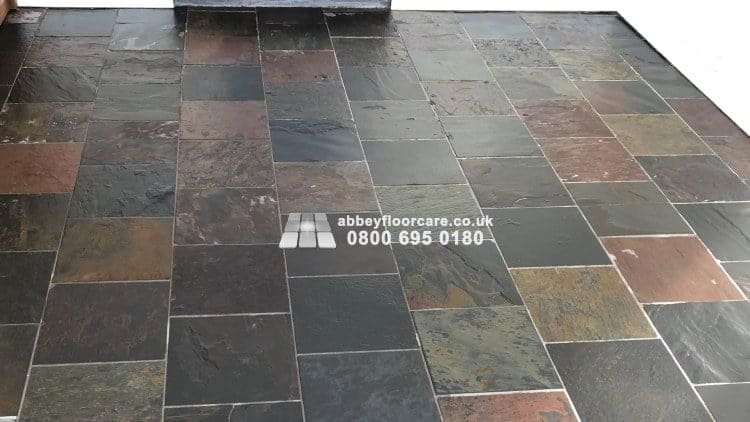
The enhancement in colour resulted from mineral activation and pigment deepening, rather than the application of dyes. The breathable barrier and impregnating protection enabled the floor to remain cleaner for longer periods, and a professionally restored and appropriately sealed slate floor is significantly easier to clean and maintain compared to one that is worn or improperly treated.
The outcome in Barnes illustrated how slate can look dramatically improved after intervention, often surpassing its original state. Related colour dynamics are explored in why some slate floors look faded while others remain vibrant, with the Barnes floor demonstrating that colour recovery relies on clean stone, suitable protection, and a dry surface. The completed floor retained its original character while becoming easier to maintain on a daily basis.
Key Takeaways from the Barnes Slate Cleaning Project on Machine-Driven Cleaning and Effective Protection
This Barnes case study highlights the effectiveness of machine-driven slate cleaning when tailored to the floor’s specific characteristics. The machine played a vital role, but the successful outcome hinged on understanding how old coatings trapped residues. Controlled pre-treatment effectively loosened these residues, mechanical agitation lifted the contaminants, and extraction removed the soiled solution before it could settle back into the surface.
David Allen’s extensive experience in stone floor restoration, spanning over 30 years, ensured the project remained focused on cleaning rather than unnecessary resurfacing. Similar project results can be observed in slate floor cleaning in Matlock, where the same approach yielded positive outcomes. The Barnes floor followed a disciplined sequence: clean first, evaluate the genuine surface, and then implement appropriate protection.
Providing maintenance guidance was essential, as proper ongoing care is the most significant factor in extending the floor’s lifespan. Using pH-neutral cleaning solutions, removing grit before wet mopping, and resealing at the correct intervals preserve the natural colours. Avoiding harsh substances such as vinegar, limescale removers, and bleach is critical, as these can alter colours, strip sealants, and cause permanent surface damage. Broader material behaviours are discussed in slate floors in UK homes, while practical principles for coating removal are elaborated in cleaning and sealing a slate floor. Singapore slate can also tolerate acrylic sealers due to its riven nature, so the same caution is warranted; the type of floor should be tested before commencing strong alkaline chemical cleaning or rotary scrubbing.
The completed Barnes floor illustrated that machine cleaning can significantly enhance appearance when combined with proper extraction and effective protection measures. The result was not merely a generic service claim; it reflected a specific project where a tired, patchy floor was revitalised, achieving a cleaner, richer, and lower-maintenance state.
Products Utilised in This Slate Floor Restoration Case Study
No third-party product or supplier links were included in the original HTML for this case study. The Barnes project is documented as a completed cleaning and sealing case study rather than a product-focused guide.

David Allen — Abbey Floor Care
David Allen has been restoring natural stone and slate floors throughout the UK for over 30 years with Abbey Floor Care. This Barnes case study illustrates how a patchy slate floor in SW13 was revitalised by removing old coatings, extracting contaminated slurry, and applying controlled protection once the floor was adequately dried for sealing.
The Article Slate Floor Cleaning Barnes Fixed Patchy Colour first appeared on https://www.abbeyfloorcare.co.uk
The Article Slate Floor Cleaning: Restoring Patchy Colour in Barnes appeared first on https://fabritec.org
The Article Slate Floor Cleaning: Reviving Faded Colours in Barnes Was Found On https://limitsofstrategy.com
References:
Https://limitsofstrategy.com/slate-floor-cleaning-reviving-faded-colors-in-barnes/