Last Updated on July 1, 2026 by David
The revitalisation of a slate floor in a Hitchin home restored the elegance of a surface that had long resisted improvement despite regular cleaning efforts. The build-up of old coatings, paired with the impact of foot traffic, had left the natural slate tiles looking dull, uneven, and difficult to maintain. I carefully stripped the ineffective Lithofin finish, performed a comprehensive deep clean of the textured surface, and applied a breathable protective sealant. This meticulous process allowed the Fired Earth slate to reclaim its vibrant colour, clarity, and a practical finish suitable for everyday use.
What Factors Contribute to a Slate Floor in Hitchin Resisting Conventional Cleaning Approaches?
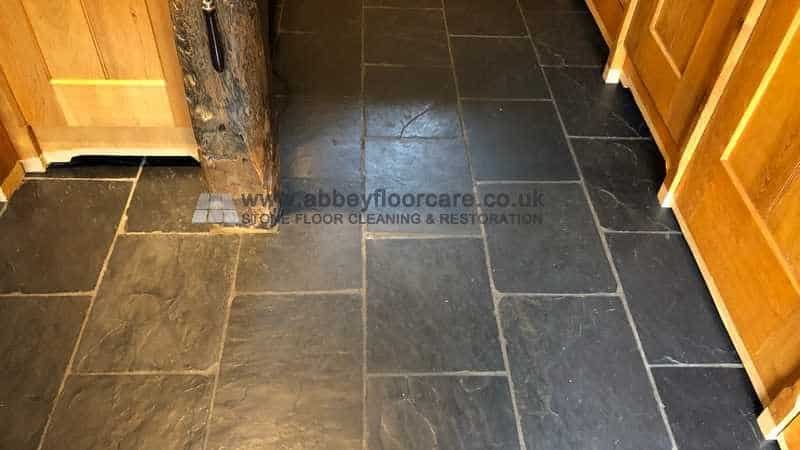
When your slate floor looks lacklustre and uneven despite regular cleaning, the problem often goes beyond just surface dirt. A homeowner in Hitchin faced this issue with a Fired Earth floor that had previously been full of character but had slowly become increasingly flat and uneven, especially in high-traffic areas.
The prior Lithofin treatment resulted in a fragmented appearance, making the floor appear inconsistent rather than simply dirty. Wear from foot traffic created lighter paths, while darker edges and recesses suggested that certain sections had been neglected during cleaning, despite frequent attempts.
The natural texture of the slate exacerbated these issues. Unlike smooth tiles, the mechanically split texture of the slate added character but also highlighted any unevenness in finish and residue under household lighting.
The build-up of coatings had become a visible problem in its own right. In areas with less texture and along the edges, the excess topical treatment trapped more dirt than the open surfaces of the tiles. This led to the homeowner’s frustration, as it seemed the floor required cleaning soon after it had just been washed.
Despite these challenges, the Fired Earth tiles displayed their natural variation, indicating that the floor had not lost its inherent character. The primary concern was the degradation of the old sealant over the textured surface, particularly in areas exposed to foot traffic, detergents, and previous resealing attempts, which contributed to the uneven appearance.
The homeowner aimed to achieve a significant improvement in the floor’s appearance while maintaining the texture that originally attracted them to the slate. This task was not suitable for grinding or altering the surface; the goal was to restore clarity to a floor that had become troublesome.
The room exhibited a common pattern found in older slate floors throughout UK kitchens, hallways, and family areas. Regular use had forced loose grit into walking paths, while traditional mopping often spread cloudy water across the low points rather than effectively removing contaminants from the tile surface.
The initial assessment focused on the visible and tactile challenges faced by the homeowner: a dull floor, inconsistent colour, dirty grout lines, and a finish that no longer functioned properly. Broader issues related to fading colour in ageing slate are discussed in problems with slate floors that fade, but this specific project in Hitchin concentrated on a singular restoration and the evidence it presented.
Expert Tips: Must-Have Products for Ongoing Slate Floor Care
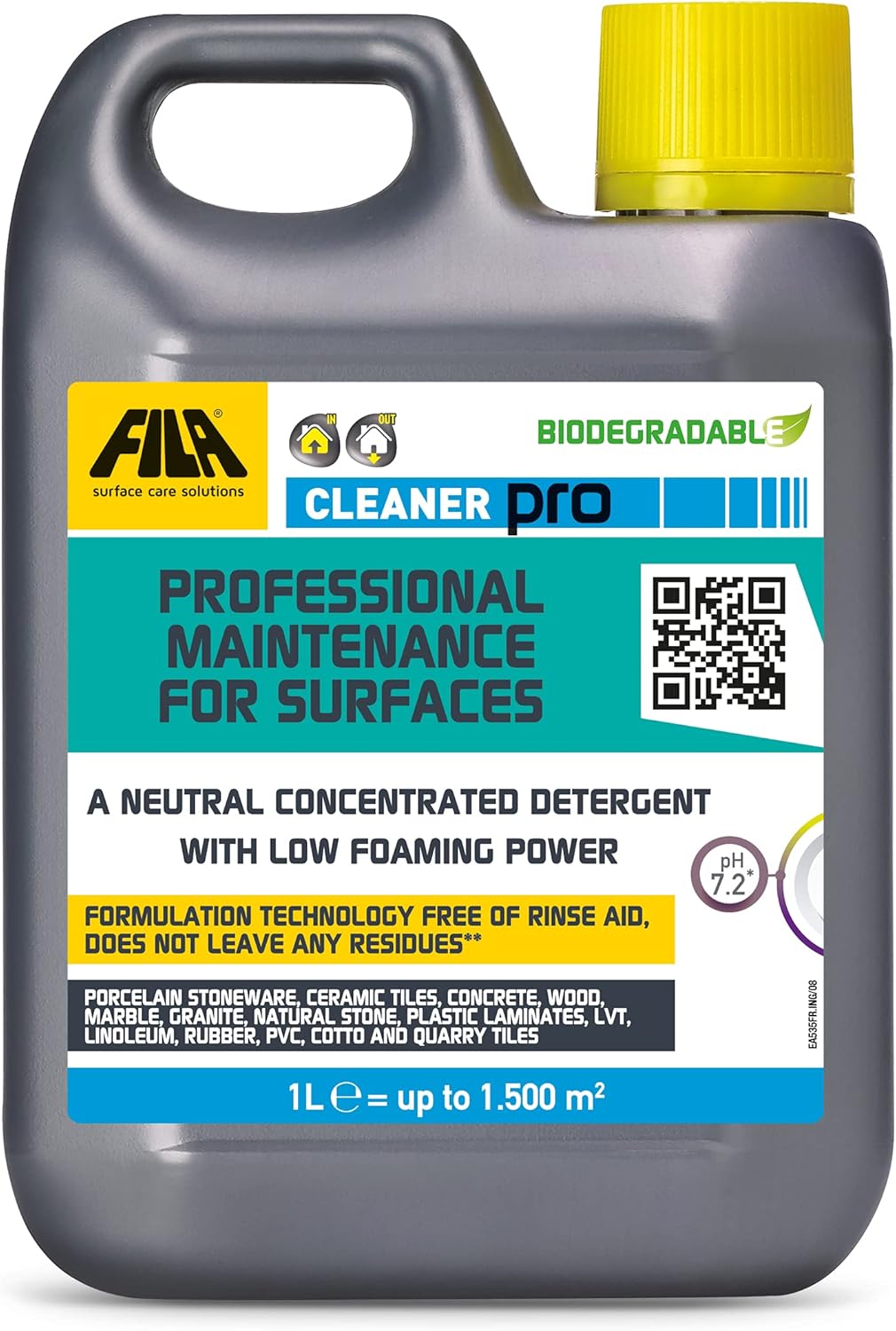
Fila Pro Floor Cleaner
|
LTP MPG Sealer H20
|
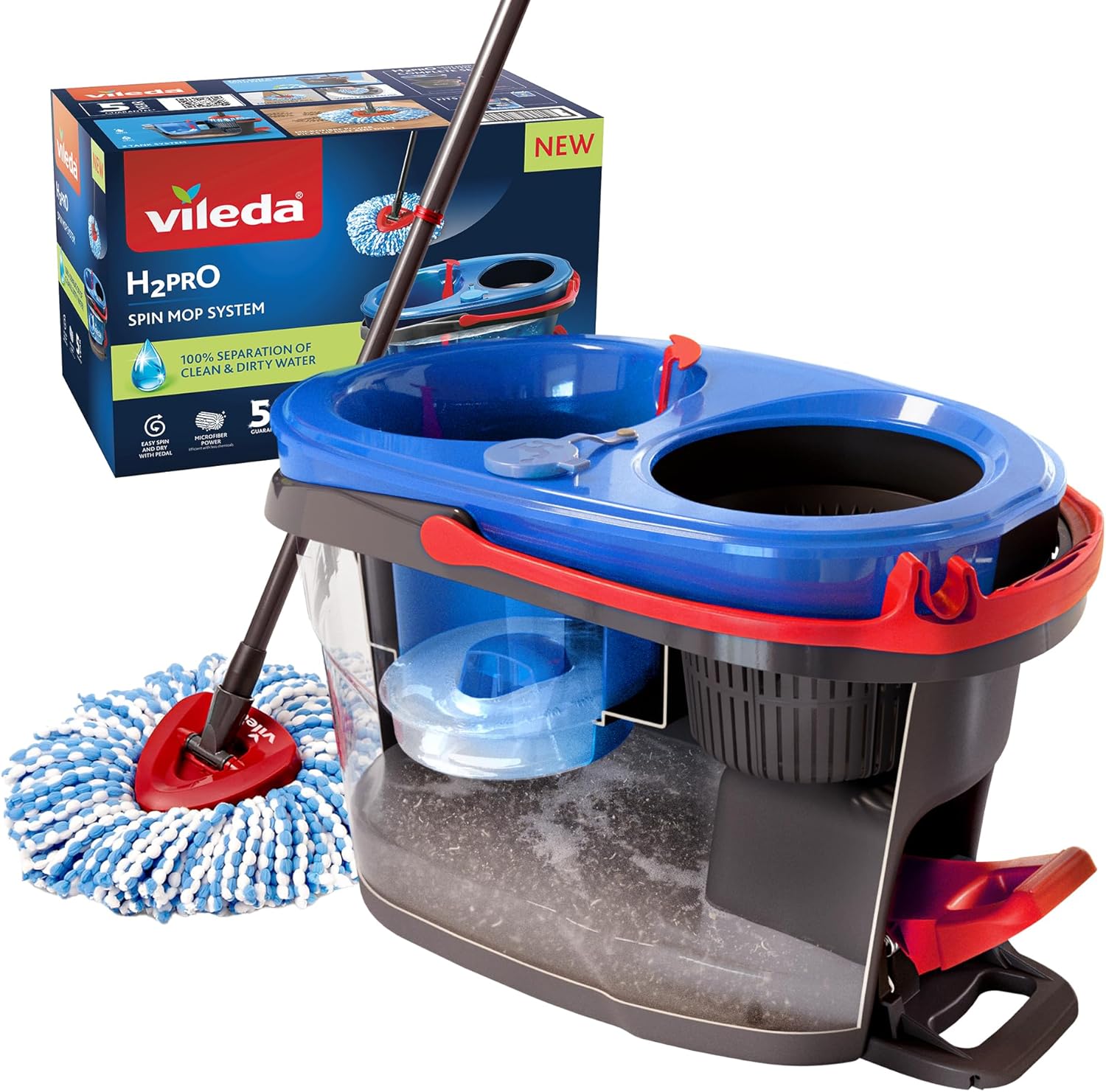
Vileda H2PrO Spin Mop System
|
What Are the Effective Steps to Safely Eliminate Old Sealer Build-Up Without Damaging the Slate Surface?
Methods for Successfully Removing Failed Coatings
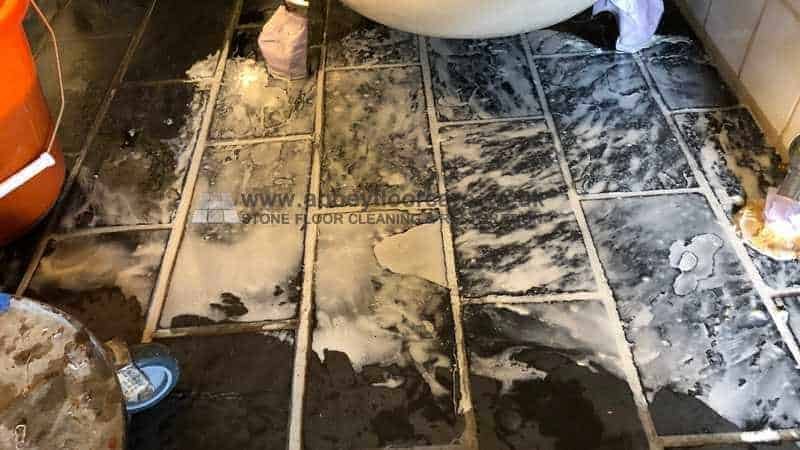
The build-up of old sealer can capture dirt within the uneven texture of the slate surface, making it essential to strip the failed finish without flattening the floor. I employed a solvent-based sealer remover, which effectively softened the old sealant, assisted in the removal of acrylic, dissolved wax, and allowed chemical penetration into the coating without affecting the slate itself.
The Lithofin coating did not come off entirely in one application; the old finish thickened in recessed areas and along grout lines. I allowed for a controlled dwell time, utilised a rotary machine for treatment, and used a grout brush around the edges to ensure the stripper could effectively break down the excess finish without altering the mechanically split surface.
Slate, being a fine-grained metamorphic rock, cleaves along natural planes. Its layered structure limits mechanical polishing, meaning restoration must focus on cleaning and sealing while being sensitive to aggressive cleaning agents. For the Hitchin floor, the aim was to strip the coatings and eliminate residues without altering the surface texture.
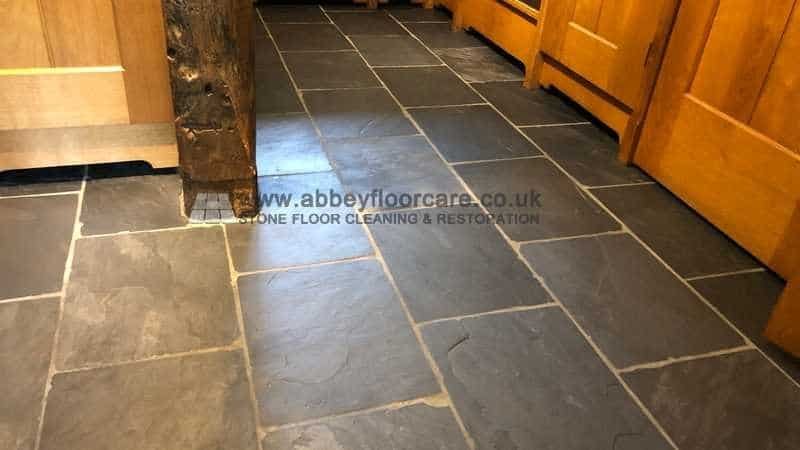
Comprehensive Cleaning and Rinsing Procedures
The cleaning phase effectively removed chemical residues from the stripping process and lifted organic soil from the textured slate. I applied a strong alkaline cleaning solution with caution, as degreasing and emulsification are vital for releasing greasy contaminants. Ensuring thorough rinsing eliminates any alkaline pH residues before applying a new protective layer is crucial.
Immediate extraction of the surface slurry was necessary, as any dirty solution could settle back into the uneven surface. A wet vacuum efficiently removed the slurry from the low points, managing contamination and preventing redeposition. This step greatly simplified the assessment of the floor before preparing it for sealing.
A finely honed slate floor features a smooth, consistent surface that diffuses light evenly. An impregnating sealer maintains the natural riven texture, while a topical sealer introduces a slight surface sheen. The Hitchin floor retained its natural textured finish, so the restoration process aimed to preserve that surface while removing the old sealant, rinsing away residue, and extracting any loosened soil.
How Can You Prepare the Slate Surface for Protective Sealing?
The final cleaning steps were essential to ensure the slate was adequately prepared for a new sealer to adhere properly. I rinsed the surface with clean water, extracted the slurry, and checked the tiles after they dried, confirming that any remaining application residue would not cause patchiness under the second coat.
This preparation aligned with the controlled slate restoration sequence outlined in professional slate restoration techniques. The method page provides broader context, while this case study details the specific steps taken in Hitchin: stripping the Lithofin coating, cleaning the textured floor, extracting slurry, and preparing the tiles for a breathable finish.
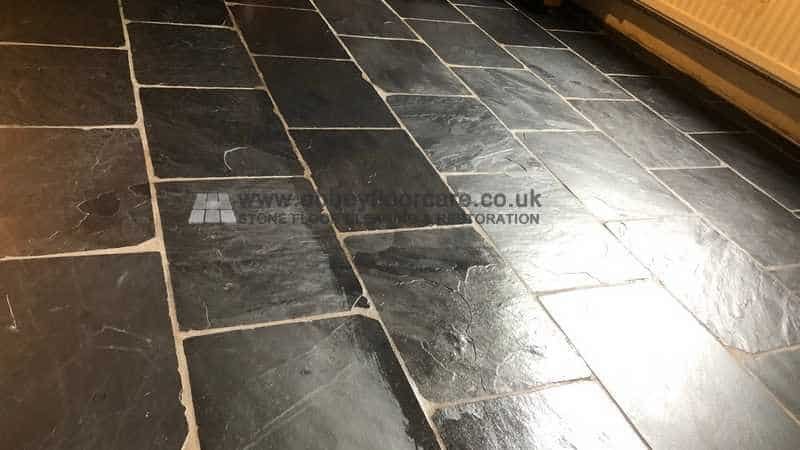
Following the correct procedure resulted in a uniform finish, preventing a floor with trapped residue beneath fresh coats. Incomplete work could have left old sealant, chemical residue, or dirty slurry in low points, whereas thorough stripping and extraction enhanced the durability of the new protection and simplified future cleaning.
Similar residue-related challenges can affect other older slate floors, particularly where previous surface treatments have rendered mopping ineffective. A comparable restoration scenario is discussed in slate restoration for a floor that mopping could not fix, emphasising the same principle: remove the unstable finish before expecting a new sealer to perform effectively.
What Improvements Were Observed After Stripping, Rinsing, and Re-sealing the Slate Floor?
A slate floor is ready for protective sealing once rinsing has effectively cleared the surface, the slurry has been properly extracted, and checks confirm the condition of the surface, allowing the slate to stabilise prior to sealing. I evaluated the Hitchin floor based on the absence of sticky residue, the clarity of the rinse water, and the uniform drying pattern across the Fired Earth tiles.
During the protection stage, I applied a colour-enhancing breathable sealer system that enriched the remaining mineral colours without obscuring the natural texture. This sealer provided pigment enhancement and visual richness, while the breathable barrier allowed moisture vapour movement and improved stain resistance without leaving behind a heavy artificial coating.
Before sealing, the floor appeared dull due to old Lithofin residue, wear from foot traffic, and uneven coating build-up, which made the slate seem flat. The cleaned surface showed significant improvement, yet it still required the right protective barrier to restore colour enhancement and ensure long-term protection.
After sealing, the floor exhibited a dramatically improved appearance and became easier to clean and maintain, as the finish repelled dirt instead of trapping it. Proper ongoing maintenance extends the lifespan of slate floors; pH-neutral cleaning preserves the finish, prompt grit removal before wet mopping minimises abrasive wear, and resealing at appropriate intervals renews protection. Detailed guidance on routine maintenance is available in how to clean slate floors that stay dull.
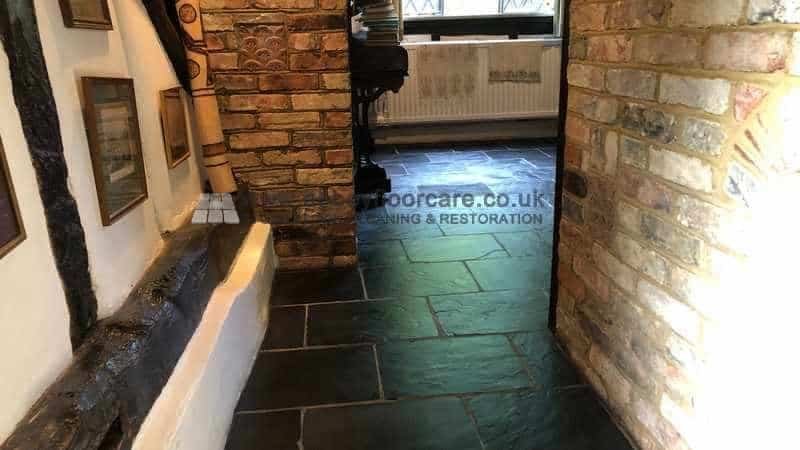
The completed floor regained clarity without compromising the textured finish that the homeowner wished to preserve. Following a pH-neutral cleaning routine helps maintain the protective barrier, while steam cleaning should be avoided, as heat can soften sealers and drive moisture into the textured surface.
Where Can You Access Comprehensive Resources on Cleaning, Sealing, and Maintaining Slate Floors?
This case study focuses on the restoration in Hitchin, while the main slate guidance page offers broader advice on cleaning, sealing, and caring for slate. The project exemplified the outcome achieved on one actual floor: I stripped the old Lithofin finish, removed residue, applied a protective sealer, and provided the homeowner with tailored aftercare instructions specific to that surface.
The same principles apply differently across Welsh origin floors, imported domestic slate, and heavily used kitchen floors, as density influences cleaning responses, porosity dictates how the surface accepts sealers, and sealer performance varies. Comprehensive guidance on material behaviour, effective soil removal strategies, and sealing decisions for long-term protection can be found in slate floors in UK homes. Queries regarding colour choices are better suited to achieving a rich wet look on natural slate flooring.
The homeowner’s ongoing plan emphasised practical advice rather than transforming this case study into a how-to guide. Gentle cleaning, timely grit removal, and reasonable resealing intervals contribute to keeping the floor cleaner for longer while these straightforward steps protect the restored finish from unnecessary wear.

David Allen — Abbey Floor Care
With over 30 years of experience at Abbey Floor Care, David Allen has successfully restored natural stone and slate floors across the UK. In this Hitchin case study, he addressed old sealer build-up, dull colours, and cleaning difficulties by stripping the failed finish, extracting residues, and applying a breathable protective sealer.
The article Slate Floor Restoration After Lithofin Finish Failed first appeared on https://www.abbeyfloorcare.co.uk
The Article Slate Floor Restoration After Failed Lithofin Treatment appeared first on https://fabritec.org
The Article Slate Floor Restoration Following Unsuccessful Lithofin Treatment Was Found On https://limitsofstrategy.com
References:
Slate Floor Restoration Following Unsuccessful Lithofin Treatment