A leaking tonneau cover usually results from one of four key issues. The stitching or seals might be compromised, the fabric could have lost its tension leading to water pooling, the fixings may not hold the edges securely, or the fabric itself might no longer possess waterproof properties. Recognising where the water is entering can help you determine which of these concerns requires your immediate attention.
Encountering wet tools and camping gear can be incredibly frustrating. Standing water in a ute tub significantly increases the likelihood of rust formation.
- Water along a seam in the tub often indicates a failure in stitching or seam integrity.
- Puddles forming in the centre of the load typically suggest that the cover is sagging, causing water to accumulate.
- Water pooling around the edges and tailgate usually points to worn fixings or a deteriorated edge seal.
- Overall dampness across the entire cover often signifies that the fabric or its waterproofing has degraded.
What Are the Main Causes of Leaks in the Seams and Stitching of My Tonneau Cover?
Over time, consistent exposure to UV rays and heat can weaken the stitching and seals on a tonneau cover. As the thread ages or a seam begins to fail, water can seep along the seam and drip into the tub during heavy rainfall. This typically appears as a wet line in the tub that aligns directly with a seam above.
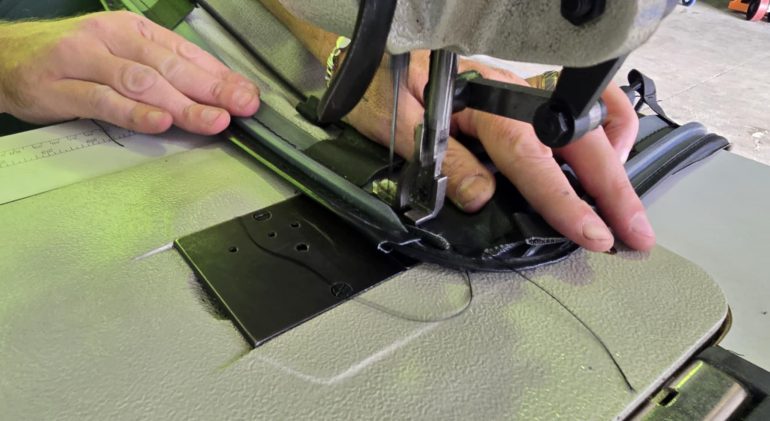
If a seam has just begun to fail, this is usually one of the simpler repairs. We can re-stitch any damaged seams and loose stitching using heavy matching thread, ensuring the join is secure once again. Addressing this issue promptly is essential; if a seam continues to open under load, it places additional stress on the surrounding fabric.
Why Is Water Collecting on My Tonneau Cover and Leaking Through?
A tonneau cover is designed to direct water off its edges. If the fabric has stretched, been overly tightened in certain areas, or sagged, it may lose its intended shape, resulting in a dip in the centre. Rainwater can accumulate in this dip instead of flowing off, and the added weight can force the water through the fabric and stitching holes.
If you notice a puddle on the cover after rainfall, this is likely the cause. A cover that has only slightly stretched can often be resized for a snug fit. If the cover was not originally custom-fitted for your tub, it may sag again, making a tailor-made tonneau cover a more effective solution. We take precise measurements from your vehicle, taking into account features like sports bars, roll bars, or ladder racks, ensuring the finished cover sits flat and allows water to run off efficiently.
What Causes Leaks Around the Edges of My Ute Tonneau Cover?
Leaks around the edges of a tonneau cover are commonly due to the fixings. Over time, press studs, bungee cords, and hook-and-loop tabs can lose their grip. When these fasteners fail to hold the edge down securely, the cover can lift at the sides and tailgate, allowing rain and road spray to seep underneath.
Inspect each fixing point with the cover closed. If a stud pops off with minimal force, a bungee has slackened, or a tab no longer adheres, these issues can create gaps for water to enter. Replacing worn fixings is a straightforward repair that often resolves edge leaks entirely. For utes with aluminium hard lids instead of soft covers, examine the seal along the edges as well. A seal that is flattened, cracked, or loose can also allow water entry, and we can assist with re-covering or repairing hard lids too.
What Occurs When the Tonneau Cover Fabric Loses Its Waterproof Qualities?
In some instances, you may not observe a specific leak, but rather the entire cover permits moisture to seep through. Canvas and PVC materials function differently in this context. Canvas is breathable, which helps reduce condensation beneath the cover, yet it relies on waterproofing to keep rain out. This waterproofing diminishes over time due to age and sun exposure. In contrast, PVC is entirely waterproof and easy to clean but lacks breathability, meaning that damp items stored under a PVC cover may sweat.
If a canvas tonneau cover has lost its waterproofing but remains structurally sound, it can typically be re-proofed. If the canvas has deteriorated throughout the entire cover, cracked, or become brittle, a patch or re-proofing may not last long, making replacement a more viable option. Our fabric guide offers insights into the differences between canvas, PVC, and other materials we utilise, should you be considering options for a new cover.
How Can You Accurately Identify Where Your Tonneau Cover Is Leaking?
To effectively locate a tonneau cover leak, simulate rainfall conditions. Start by clearing the tub, closing the cover, and having someone slowly spray a garden hose over it while you observe from inside the tub with a torch. Begin at the tailgate end and move forward, noting which seam, corner, or fixing allows water in first.
- Mark each leak with a piece of tape on the inside of the cover.
- Watch for water pooling on the top of the cover while the hose is running.
- Inspect every press stud, bungee, and tab around the edges.
- Capture clear photos of each problematic area in daylight.
Having clear images of the damage can provide us with valuable insights before your visit, enabling us to offer a more accurate assessment of the necessary repairs.
Should You Repair or Replace Your Leaking Tonneau Cover?
Most leaking tonneau covers are worth repairing, as long as the base fabric is in good condition. Issues such as split seams, minor tears, worn fixings, and covers that have lost their shape can all be effectively addressed. A repair is generally more cost-effective and quicker than starting anew, and we also repair covers not originally manufactured by us, including those purchased elsewhere or second-hand.
Replacement becomes the better option when the fabric is cracked, brittle, or sun-bleached across much of the cover, or when the cover never fitted your tub correctly. In such scenarios, fixing one leak may simply move the problem to another area. Our repairs and alterations service covers ute tonneau covers and canopies, as well as trailer covers and tarps. Our canvas repairs page details the re-stitching, patching, and re-proofing services we offer for both canvas and PVC materials.
Expert Tonneau Cover Repairs Available at Our Redland Bay Workshop
At our LJ Covers workshop located at Unit 4/107 Jardine Drive, Redland Bay, we specialise in repairing and manufacturing tonneau covers for customers across Brisbane and the Redlands Coast. With 25 years of experience in fabricating and repairing canvas, PVC, and poly-fabric products, the leaks discussed in this guide are common repairs we handle. When you bring your cover in, we will assess the seams, fabric, fixings, and overall fit, providing you with a recommendation on whether a repair or a new cover is the best option for your ute.
To kick off the process, please share details about your vehicle, your experiences, and where you suspect the water may be entering. If possible, send us a photo. If you’re uncertain whether your cover is worth fixing, feel free to call Jason or Leah at 0411 781 221 or send us a message through our contact page.
Original Article First Published At: Why Your Tonneau Cover is Leaking (And What You Can Do About It)
The Article: Tonneau Cover Leaking: Causes and Solutions to Fix It first appeared on https://writebuff.com
The post Tonneau Cover Leaking: Causes and Fixes You Need to Know appeared first on Limits Of Strategy.