Last Updated on May 11, 2026 by David
The complex task of restoring a worn Victorian Minton tile floor in Walsall involved overcoming various obstacles, including tile movement, trapped residues, layers of outdated coatings, and a faded clay hue. The initial step focused on stabilising the hallway to enable comprehensive cleaning, followed by a careful removal of residues. The final sealing process was completed with a finish that accentuated the original pattern while maintaining the historical character of the surface.
What Causes Persistent Dullness in Walsall’s Minton Floors After Cleaning?
Assessing the Original Condition of Victorian Tiles for Effective Restoration
If your <a href="https://homerenonews.com.au/victorian-tiles-in-a-derby-hallway-maintenance-challenges/">Victorian tiles</a> continue to look dull despite multiple cleaning attempts, trapped contaminants and structural movement are likely culprits, rather than just surface dirt. The Minton hallway in Walsall displayed a compromised surface with muted colours, loose tiles, an outdated sealer, and residues embedded within the clay. Regular mopping only redistributed dirt, failing to eliminate it effectively. This scenario firmly categorised the project as restoration, which demanded specialised techniques instead of regular cleaning methods.
While the Walsall hallway retained its status as an original patterned entrance floor, its surface did not reveal the vibrant contrasts of red, buff, cream, and dark clay typical of a well-restored Minton layout. Foot traffic had pressed fine soil into the tile surface, and the previous topical sealer had diminished the overall finish. darkened grout lines were a result of accumulated surface residues. A similar situation was observed in the Minton tile floor restoration in Ovington, where earlier coverings and compacted dirt concealed the original floor until careful restoration revealed the intricate pattern.
Walsall features a substantial number of late Victorian and Edwardian terraced houses, along with interwar semi-detached homes and post-war housing developments. Many older properties date back to the late 19th and early 20th centuries, resulting in a high prevalence of Victorian tile floors in entrances, porches, pathways, and sometimes kitchens. Located in the West Midlands metropolitan area, Walsall falls under the jurisdiction of Walsall Council, with most central areas designated by the WS postcode districts. The town’s rich industrial heritage and preserved period housing have contributed to the presence of numerous original clay and encaustic tile floors, often hidden beneath modern coverings or outdated sealers.
How Do Hidden Residues Contribute to the Dull Appearance of Tiles?
The existence of trapped residues is a key reason why the hallway appeared worn even after extensive cleaning efforts. The porous nature of the clay surface allowed dirt, old cleaning solutions, waxes, and coating residues to settle beneath the visible layer of the tiles. While fresh water may temporarily moisten the contamination, it was ineffective for removal. This scenario underscores the practical effects of tile porosity on an ageing Minton floor: soil infiltrates the pores, accumulates around grout lines, and causes a flat appearance despite diligent cleaning.
The former topical sealer had created an inconsistent barrier across the floor. Coatings that initially provided a temporary shine can break down into sticky residues, trapping dirt and creating darker patches in areas where the finish has worn thin from foot traffic. the restoration process required careful stripping of the old sealer, releasing surface residues, thoroughly rinsing the floor, and extracting the resulting slurry with a wet vacuum before applying any protective finish.
Contamination from carpet adhesives was also a concern, as many Walsall hallway tiles had been previously covered with carpet, linoleum, or vinyl at various times. A hidden layer can exist beneath thick glue, bitumen residues, tape remnants, and stains that only become obvious once the covering is removed. In this case, no significant adhesive presence dominated the hallway; however, the inspection still looked for brownish glue, black bitumen, softened coatings, and scraper marks, as these residues can affect the restoration process.
How Does Moisture Behaviour and Tile Stability Affect Restoration Efforts?
The characteristics of old permeable sub-floors significantly influenced the cleaning and sealing methods suitable for the Walsall floor. Excess water can penetrate the porous clay, reach the underlying bedding, and lead to tile movement, lifting, dampness, salt reactions, or an unstable foundation before sealers are applied. This moisture behaviour necessitated a reliance on controlled cleaning, careful rinsing, and extraction rather than inundating the hallway with water.
Loose tile movement was a critical factor to consider, as water and slurry can seep beneath raised edges and into gaps. Once slurry dries beneath the tile surface, the floor may still appear dirty from the edges even after the main surface has been cleaned. the restoration process treated the floor as a cohesive historic assembly: clay tiles, grout lines, bedding, moisture pathways, and breathable protective measures all needed to work together in harmony.
During the assessment, the condition of missing tiles, backfilled doorway patches, exposed sub-floor areas, cement leveling compound backfill, and prior repair infills were also evaluated. Cement leveling can disrupt the original tile pattern, obstruct the visual continuity, and leave a repaired hallway looking patchy rather than seamless. This Walsall floor primarily required local resetting rather than extensive replacement work; however, evaluating the doorway, original tiles, and sub-floor condition ensured that a simple cleaning was not mistaken for a proper restoration.
Why Is This Restoration Project Necessary?
This project is classified as restoration because mere cleaning would not rectify loose tiles or address the failures of old coatings. The work was crucial to tackle compacted grime, surface coatings, grout line residues, moisture risks, and unstable areas before any sealing could take place. A similar restoration sequence is documented in the Victorian tile restoration case study in Penkhull, where loose sections and damaged joints also required reintegration into the overall floor layout to achieve a visually coherent result.
The original Minton pattern had not vanished; it was simply hidden from view. Restoration effectively removed the old products and ingrained dirt that muted the colours, subsequently protecting the clay with a breathable finish instead of a heavy surface film. Following professional intervention, the floor was expected to display a significantly enhanced appearance. A professionally restored and properly sealed Victorian tile floor is much easier to clean and maintain compared to a worn or improperly treated surface.
Maintaining the restored clay surface is essential. Regularly removing dry grit before wet mopping and using a pH-neutral cleaner instead of harsh household chemicals is advisable. Strong cleaners should be avoided, as they can leave alkaline residues, bleach grout lines, and shorten the lifespan of the sealed finish. Broader maintenance principles for older porous clay floors are detailed in the Victorian and Minton tile cleaning hub, which provides guidance for aftercare decisions made in this Walsall case study.
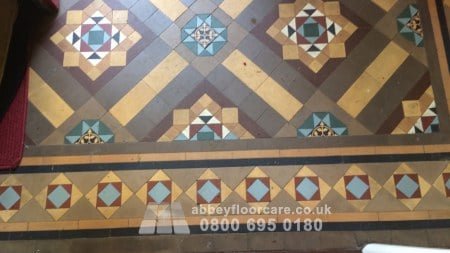
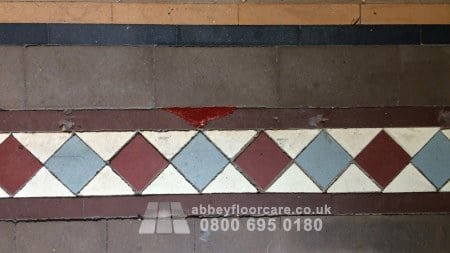
What Are the Key Factors Leading to Loose Tiles and Deep Soil Issues in This Restoration Project?
The presence of loose Minton tiles and deep soil transformed this worn hallway into a restoration project due to underlying issues lurking beneath the visible surface. The homeowner noted dull colours, dark joints, and unstable areas; however, the root causes were movement, trapped residues, and contaminated slurry paths beneath and between the original tiles. To effectively address these issues, structural re-bedding was essential before thorough cleaning could restore the floor to an even state.
Extracting slurry was crucial, as loosened soil, rinse water, mineral salts, and remnants of old coatings needed removal from the tile pores rather than allowing them to re-dry within. The restoration process utilised controlled water, agitation, rinsing, and wet vacuum removal, ensuring the floor was cleaned without excessively saturating the old permeable sub-floor. Similar movement and moisture behaviours are discussed in the right way to restore Victorian tiles properly, which illustrates how stabilisation and breathable protection are integral to the historical flooring restoration process.
Stabilising loose tiles is essential before deep cleaning can uniformly restore the floor.
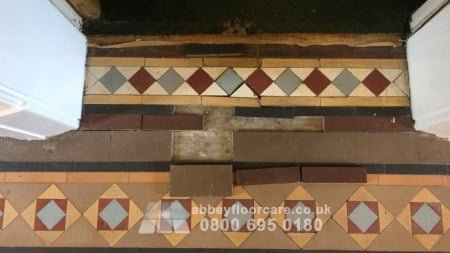
What Steps Were Taken to Stabilise the Walsall Hallway While Preserving Original Tiles?
Scrubbing a loose Minton hallway before stabilising it risks driving slurry beneath the tiles, potentially damaging fragile edges. In this case, the loose sections were carefully lifted, old bedding and residues were removed, and the tiles were reset to uphold the integrity of the original layout. This methodology ensured that repairs became an integral part of the restoration workflow rather than developing into a separate repair narrative.
Thorough surface cleaning might have eliminated some visible grime, but it would not have addressed the old sealer, grout smears, mineral salts, and residues stuck within the pores. Controlled restoration employed an alkaline cleaner, scrubbing pad, rotary machine, clean rinse water, and wet vacuum extraction to remove contaminated slurry from the tile surface and joints. Where necessary, acid wash neutralisation was performed to remove traces of cement haze or mineral salts before moisture could evaporate and disturb the colour balance.
Careful stabilisation protected the original tiles, as the process was guided by the floor’s condition instead of applying a one-size-fits-all method across the entire area. Broken tiles, missing tiles, and the need for matching replacement tiles were all considered to ensure that the pattern exhibited continuity. this hallway primarily required resetting, thorough cleaning, and breathable protection. This sequence restored the floor’s appearance, simplified surface maintenance, and avoided grinding down the historic clay face.
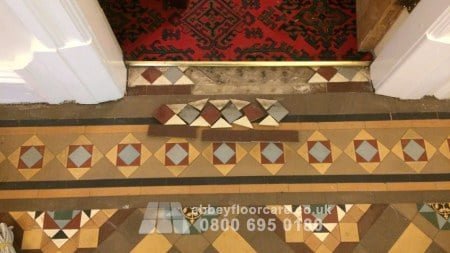
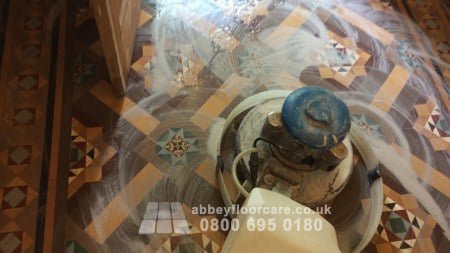
How the Restoration Process Enhanced Clarity While Preserving Historical Character
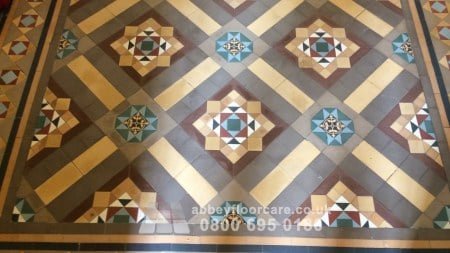
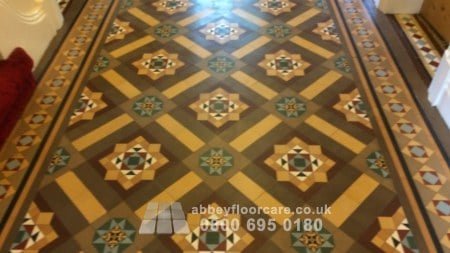
If your Victorian tiles are hiding colours beneath layers of dull wear, restoration should enhance definition without erasing the genuine age of the floor. The Walsall floor regained its vibrant contrasts as old coatings, embedded residues, and dark joint contamination were meticulously removed from the clay surface. The original Minton pattern became more prominent, while authentic signs of traffic wear and historical character remained visible.
Historic dishing was preserved, as grinding the floor flat would have removed original fired clay from the tile surface. Dishing represents permanent wear accumulated over decades of foot traffic and should not be viewed as a failure when the finished floor retains its historical context. The protective finish applied was a breathable colour-enhancing sealer that penetrated the pores, was buffed off without leaving a superficial coating, and provided stain resistance while allowing moisture to escape.
The completed hallway showcased a significantly improved appearance compared to its pre-restoration state and, in many respects, surpassed how it might have looked under outdated domestic coatings. The sealed surface became easier to maintain, as removing dry grit, employing neutral pH cleaning, and resealing at appropriate intervals helped preserve the restored colour depth. The behaviour of colour in worn patterned clay is further explored in restoring colour and pigment to faded Victorian mosaic tiles, which delves into surface wear and clay pigment depth in greater detail.
Where Can You Access Further Insights on Common Issues with Victorian Tiles?
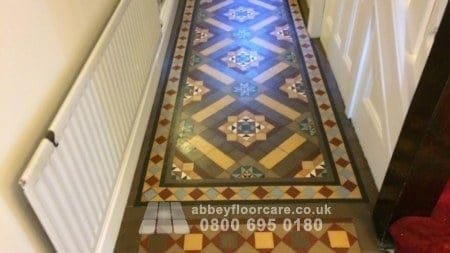
Grasping common Victorian tile problems requires an understanding of the broader context, as residues, loose sections, faded colours, and missing pieces seldom occur in isolation. The Walsall hallway exemplifies the necessity for a holistic restoration approach: the original tiles, grout lines, moisture pathways, coating histories, and final protective measures all contributed to the outcome. A related Minton hallway project is detailed in the Minton tile hallway restoration in Stafford, where surface contamination and controlled extraction similarly influenced the final appearance of the floor.
When dealing with broken tiles, missing tiles, or areas of old repair that disrupt a Victorian hallway pattern, it is vital to source and match replacement tiles with precision. Quality repair work respects the original size, colour, border logic, thickness, and layout of the old floor to ensure new work blends seamlessly with the existing design. More detailed cleaning, sealing, and aftercare guidance can be found in the Victorian and Minton tile cleaning hub, which connects this Walsall outcome to broader material guidance.
Proper ongoing maintenance is the key factor in extending the life of the restored floor. A tailored handover should include practical advice: remove grit before wet cleaning, use a pH-neutral maintenance cleaner, avoid bleach or steam cleaning, and assess sealing processes before the surface begins to absorb spills rapidly again. Simple yet essential.

David Allen — Abbey Floor Care
David Allen has over three decades of experience in restoring Victorian and Minton tile floors through Abbey Floor Care. This Walsall case study outlines how loose tiles, old residues, and dulled clay colours were rectified through meticulous stabilisation, controlled cleaning, and breathable protection.
The Article Worn Victorian Tiles Minton Floor Restoration first appeared on https://www.abbeyfloorcare.co.uk
The Article Victorian Tiles Restoration for Worn Minton Floors appeared first on https://fabritec.org
The Article Victorian Tiles Restoration for Reviving Worn Minton Floors Was Found On https://limitsofstrategy.com